Design that ships — not design that stays in Figma.
From discovery research to design systems, we design products people want to use and keep using. 18 years of watching real users interact with software we've built has taught us what works — and what just looks impressive in a prototype.

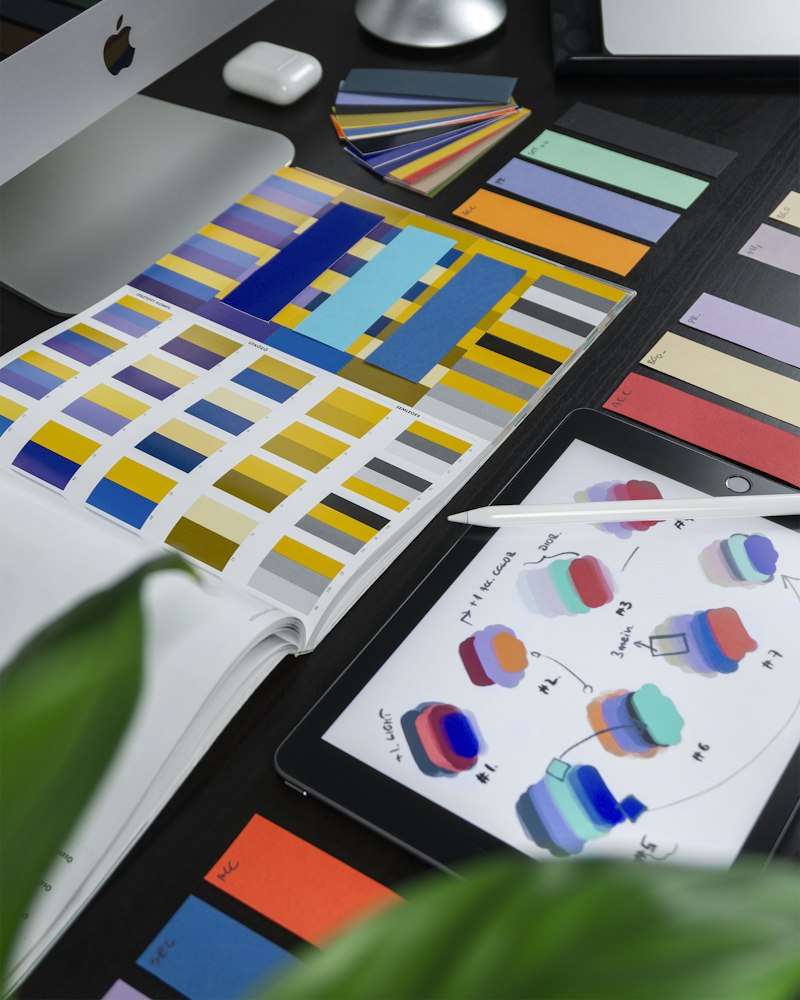
User research synthesis — turning interview data into design decisions.
Our philosophy
Design is strategy — not decoration.
We've designed products for healthcare workers using gloved hands, logistics managers on moving vehicles, financial analysts across dual monitors, and consumers with two seconds of patience. Context is everything. Our design process starts with user research because assumptions about users are usually wrong. We test prototypes with real users before engineers write a line of code — because it's cheaper to learn early that the navigation model doesn't work than to discover it after three sprints of development.
Every design decision should be traceable back to a user need or a business objective. If it can't be, it's decoration.
User interviews per discovery phase
Faster iteration with embedded designers
The difference
The gap between good design and shipped design is engineering empathy.
Beautiful mockups that engineers can't build within the sprint are just art. We design with implementation in mind — every component maps to a buildable unit, every animation has a purpose and a performance budget, and every edge case is accounted for before handoff. Our designers sit in engineering standups because the best design decisions happen at the boundary between design intent and technical reality.
Reduction in post-handoff design revisions vs. industry average
SDTC Digital project data
Research-driven decisions
Every design choice is backed by user evidence — interviews, analytics, or usability test results.
Accessibility from day one
WCAG 2.1 AA compliance built into the design process, not retrofitted after development.
Component thinking
Design systems that scale — reusable components, design tokens, and patterns that work across products.
Measurable improvement
Task completion rates, time-on-task, and error rates tracked before and after design changes.
From discovery to design system
Our design practice covers every stage of the product lifecycle — from understanding who your users are to maintaining the system that keeps the product consistent at scale.
Understanding users, their context, and their unmet needs before designing anything.
Semi-structured interviews with representative users to understand goals, frustrations, and workarounds.
Structured evaluation of how competitors solve the same problems — identifying gaps and opportunities.
Behavioural analytics synthesis to understand how users actually use the current product versus how they're expected to.
On-site observation of users in their actual environment — essential for enterprise and field-worker products.
End-to-end mapping of the user experience across touchpoints, identifying pain points and opportunities.
Common questions about product design
From teams evaluating their first design engagement to organisations scaling their design practice.
Enough to design with evidence, not assumptions — typically 8–12 user interviews for a new product, 4–6 for a redesign where we also have analytics. We're ruthlessly efficient with research because the goal is to inform design decisions, not to produce a research report. Every interview generates actionable insights that change something in the design.
How we work
Designers embedded in engineering — not throwing specs over the wall.
Our designers attend standups, review pull requests for visual accuracy, and iterate based on what production analytics reveal. The gap between design intent and engineering implementation is where user experience degrades — so we close that gap by making designers accountable for what ships, not just what's in Figma. This embedded model means fewer revision cycles, faster time-to-ship, and products that look and feel exactly like the design intended.
Fewer design revision cycles
Faster design-to-production
How we take a product from discovery to design system
Discover and research
User interviews, competitive analysis, analytics review, and stakeholder alignment. We build a shared understanding of who the users are, what they need, and what the business requires.
Define and structure
Information architecture, user flows, and the prioritised feature set that serves the user goals we discovered. Content strategy if the product is content-heavy.
Design and prototype
Wireframes to high-fidelity mockups, built as interactive prototypes and tested with representative users at each fidelity level.
Test and validate
Moderated usability testing with real users. Design decisions validated before they become code. Issues caught here cost a fraction of what they cost in development.
Ship and measure
Designers embedded in engineering sprints through to production. Post-launch analytics tracked against pre-design baselines to prove the design worked.
Selected product design work across healthcare, logistics, and fintech.
INSIGHTS
Thinking worth reading
Let's design something people actually want to use.
Tell us about your product, your users, and what isn't working. We'll come back with a clear view of how we'd approach the design, what it takes, and whether we're the right team for it.