✦ AurvikAI — How we work
The methodology behind AI that actually ships.
Five phases. One standard. Every engagement. No exceptions.
70% of enterprise AI projects fail to reach production. Not because the technology doesn't work — because the problem wasn't defined, the data wasn't ready, or the architecture wasn't built for production. The Aurvik Method exists to prevent all three.
The problem we solve
Why 70% of AI projects fail — and how a methodology prevents it.
Enterprise AI projects fail for three predictable reasons: the business problem wasn't defined precisely enough to be solved by AI, the data wasn't clean or complete enough to train a reliable model, or the system was built for a demo environment that doesn't reflect production reality. None of these are technology problems. They're methodology problems.
of enterprise AI projects never reach production
Industry analysis, 2025
Problem definition failure
Vague objectives like 'improve efficiency' that can't be measured or validated
Data readiness gap
Models trained on curated samples that don't represent production data distribution
Architecture mismatch
Systems designed for demo latency, not production throughput and reliability
The AI Success Framework.
Five phases. Each one designed to make sure the next is worth doing. This is the structured process we apply to every engagement, every time, without exception.
Define
We define what success looks like — specifically and measurably — before touching data or selecting a model. Not 'a better user experience' — a 30% reduction in processing time, a 95% recall rate, a £2M cost saving. Success criteria set here determine everything that follows.
Audit
We audit the data the system will learn from — completeness, quality, distribution, bias, and leakage risk. Bad data with a good model produces confident wrong answers. We also audit infrastructure: latency requirements, compliance constraints, integration dependencies, and the production environment.
Architect
Model selection, training strategy, integration design, and deployment architecture are designed together — not sequentially. Every decision is made explicit: why this model, why this architecture, why this integration pattern. The architecture document is approved before implementation begins.
Build and evaluate
Development is iterative with continuous evaluation against the success metrics defined in phase one. Stakeholders see progress throughout — not a presentation at the end of six months. Problems surface during development, when they're cheap to fix.
Deploy and optimise
Production deployment with monitoring, alerting, drift detection, and a 90-day optimisation window. We monitor against the success metrics from phase one — not generic model metrics. We iterate until the targets are consistently hit.

Phase 02 deep dive
The data audit that saves six months of wasted development.
Most AI failures trace back to data problems that should have been caught before development started. Our audit process evaluates completeness, quality, distribution, bias, and leakage risk across every dataset. We've killed projects at this stage — when the data couldn't support the outcome the client needed. That honesty saves months of wasted development and hundreds of thousands in misallocated budget.
We've told clients 'your data can't support this' — and saved them six months of failed development.
Engagements include data audit
Of proposed projects redirected after audit
What changes when you follow a methodology.
The difference between AI that demos well and AI that runs in production isn't the model — it's the process around the model.
Without methodology
- Success defined vaguely — 'improve efficiency'
- Model selected based on hype, not fit
- Data problems discovered during deployment
- Architecture designed for demo, fails at scale
- Stakeholders see results only at the end
- No monitoring — model degrades silently
With the Aurvik Method
- Success defined as specific, measurable KPIs
- Model selected based on data audit and production constraints
- Data problems caught in week two, not month six
- Architecture stress-tested against production reality
- Stakeholders see working progress every two weeks
- Full observability — drift detection, alerting, retraining triggers
How the method adapts to different AI challenges.
The five phases are consistent. How they're applied depends on the type of AI system being built.
Retrieval-augmented generation systems require specific attention to document ingestion, chunking strategy, retrieval accuracy, and hallucination prevention.
Assess document quality, format diversity, and coverage gaps before building the retrieval pipeline.
Semantic chunking with overlap tuning — optimised for your document types and query patterns.
Precision and recall measured against gold-standard Q&A pairs before LLM generation layer is added.
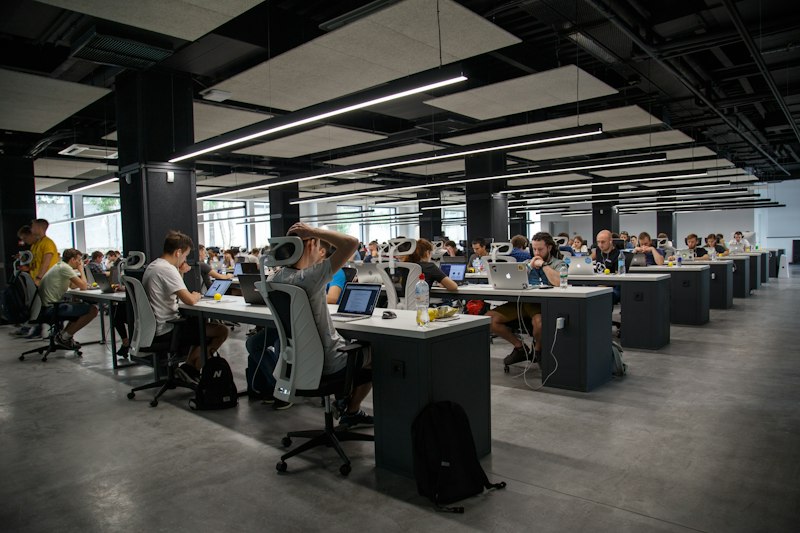
Phase 03 architecture review — model selection, integration design, and deployment topology decided together, not sequentially.
The Aurvik Method in numbers.
of engagements follow all five phases
ROI commitment on every project
of proposed projects redirected after data audit
systems deployed without production monitoring
years of engineering behind the methodology
average ML model improvement vs. baseline
Phase 05
AI in production is a process, not an event.
Deployment is not the finish line — it's where the real work begins. Every AurvikAI system ships with full observability: model performance monitoring, data drift detection, automated alerting, and retraining triggers. The 90-day optimisation window isn't a warranty — it's the period where we tune the system against real production data until it consistently hits the metrics defined in phase one.
We stay until the metrics we defined in week one are consistently met. That's the AurvikAI commitment.
Day optimisation window
Day checkpoint cadence
AllAiSuite
The Aurvik Method applies to pre-built solutions too.
AllAiSuite is our library of ready-to-deploy AI solutions for healthcare, finance, logistics, and more. Same five-phase methodology. Same production standards. Shorter timeline.
“We'd been burned by two AI vendors who started building before understanding our data. AurvikAI spent two weeks on the audit phase and told us one of our three use cases wasn't viable. That honesty saved us six months.”
Head of Data
“The 30/60/90-day checkpoints changed everything. For the first time, we could see exactly how the AI system was performing against the metrics we'd agreed on before development started.”
CTO
INSIGHTS
Thinking worth reading



Apply the Aurvik Method to your AI challenge.
Every AurvikAI engagement starts with a conversation — no pitch, no proposal until we understand what you're trying to achieve and whether AI is the right solution.