Machine Learning Development
ML models that predict what matters — and stay accurate in production.
We start with the simplest model that solves the problem. Complexity is added only when it improves the outcome.
Custom machine learning for classification, prediction, recommendation, and anomaly detection. Built by engineers who have shipped production ML systems across healthcare, finance, logistics, and retail.
ML philosophy
Every model earns its place in production.
We establish baselines before building models. The ML model needs to beat the baseline meaningfully to justify the complexity. Many don't — and we'll tell you when that happens. That's how you get systems that are maintainable, not just impressive in a demo.
of proposals we decline after data assessment
AurvikAI engagement data
Problem framing first
Translating the business problem into the correct ML problem — classification, regression, ranking, or anomaly detection — before touching data.
Baseline before model
Rule-based or naive statistical baselines that define the bar the ML model must meaningfully exceed.
Cost-aware evaluation
Measuring the business cost of each error type — a false negative in fraud detection costs differently than in recommendation.
Drift-aware deployment
Monitoring for data drift and concept drift from day one, with automated retraining triggers.
ML capabilities we deliver
Production systems solving real business problems.
Classification & categorisation
Document classification, support ticket routing, content moderation, and lead scoring. From binary classification to multi-label taxonomies with hundreds of categories.
accuracy on ticket routing
How we build production ML
A repeatable process that reduces risk and accelerates time to value.
80% of ML project time is data work. We front-load it deliberately.
Completeness, quality, leakage risk, and distributional analysis before feature engineering begins.
Domain-informed features that capture real signal — combined with your domain experts' knowledge.
Automated validation pipelines that catch data problems before they reach the training pipeline.
Production monitoring
Models degrade. We design for that reality.
Every ML system includes drift monitoring, retraining triggers, and performance dashboards. Data drift means the inputs are changing. Concept drift means the relationship between inputs and outputs is changing. Both degrade predictions. Both are detectable. Both trigger automated retraining in our systems.
models degraded undetected
avg. drift detection time

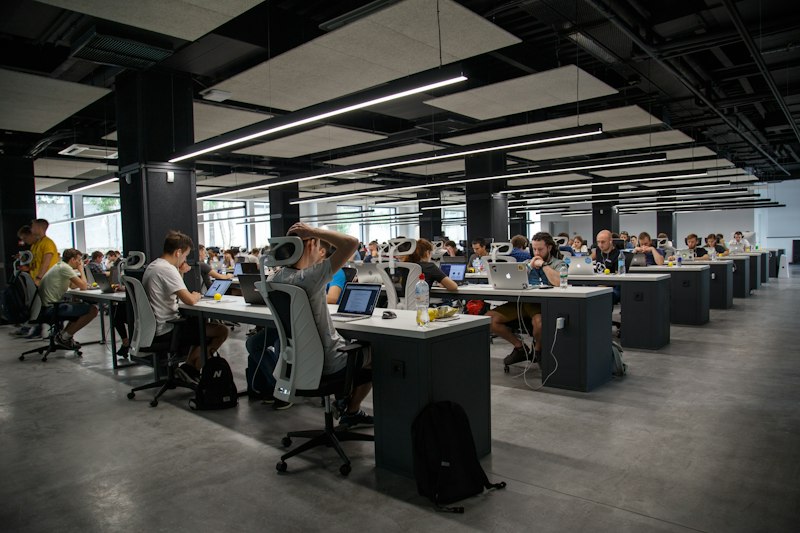
AurvikAI model evaluation — business-relevant metrics, not just accuracy.
Typical ML engagement timeline
From problem framing to production deployment.
Problem framing & data audit
Translate the business problem into an ML problem. Audit data for quality, completeness, and leakage risk. Establish baseline performance.
Feature engineering & model development
Build domain-informed features. Train candidate models. Evaluate against business-relevant metrics. Select the model that balances performance with maintainability.
Production deployment & monitoring
Deploy with drift monitoring, retraining triggers, and performance dashboards. Validate in production against the evaluation framework.
INSIGHTS
Thinking worth reading
Ready to build ML that works in production?
Let's start with a conversation about your problem, your data, and what a production ML system could deliver for your business.